


On Sunday morning, I stared out the window onto Lake Geneva. Common Ground Pilgrimages hired Sarah and me as faculty for an immersive retreat centered on Mary Shelley’s Frankenstein, so I was in lovely Muntelier, Switzerland. As I watched clouds gathering around the Alps, I tried to prepare for our last class of the retreat. But I was preoccupied with the Vice President.
J.D. Vance inspires a fear of contagion in me. I worry that witnessing and thinking about his next-level cynicism will cause me to become cynical, too. Sunday morning, I realized that I haven’t caught the Vice President’s cynicism, but I have been infected by political resentment.

Intramural Resentment
The word “intramural” is typically used to talk about sports, but it comes from the Latin word for walls. Intramural, then, means situated within walls. I’ve been thinking about how the fiercest resentments I’ve felt and observed are intramural: here is a person I believe I should align with, and I am filled with bitterness when I discover that we don’t align. Psychoanalyst Sigmund Freud and anthropologist Ernest Crawley called this feeling “the narcissism of small differences.” The more that we have in common, the more we despise differences among ourselves. To paraphrase the modern philosopher Taylor Swift: …and baby, that’s politics.
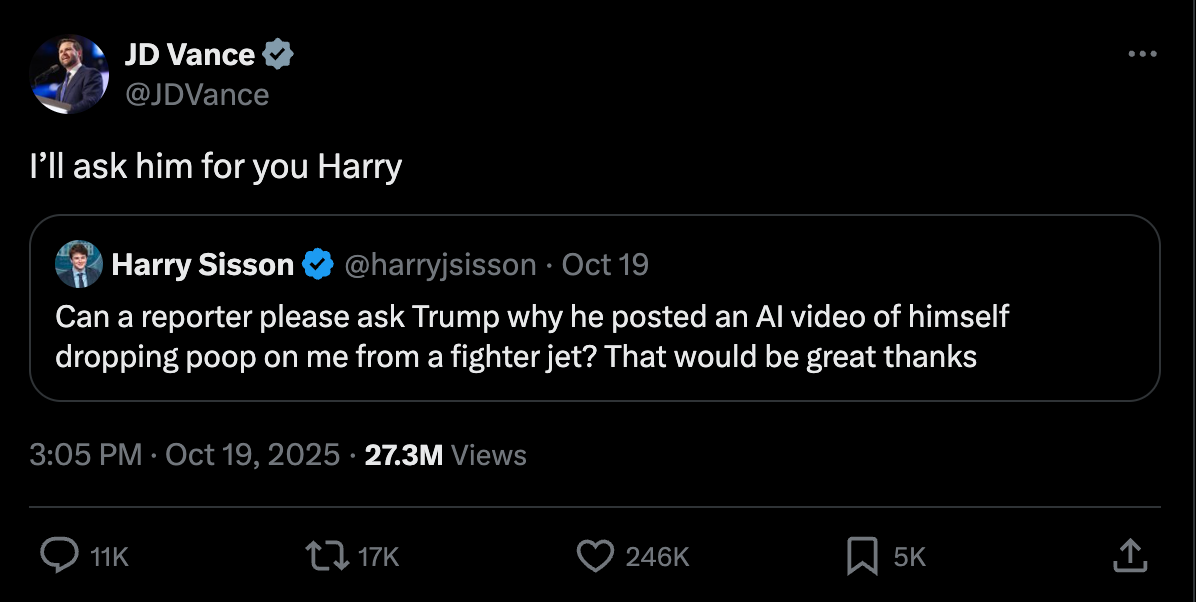
For the last decade, I’ve felt severe intramural resentment about people like VP Vance. I know I’m not alone. No one is as unhappy with MAGA officials as former Republicans-turned-Never-Trump-turned-Uncomfortable-Democrats-We-Guess-Until-Maybe-There’s-Something-Else. As the top two constitutional officers in our country make shitposting increasingly literal, I find myself seething at the Vice President. I know he knows exactly what he’s doing. He’s from my part of the world. We used to agree on some things. I am so sad and in some ways confused and in other ways not at all confused, which makes it worse. Sad + confused + clear = resentment, apparently.
Victor Frankenstein
Frankenstein remains salient in popular imagination because of an arresting aesthetic: look at this memorable rendering of monstrosity. Look at how he’s both human and inhuman enough to be profoundly disturbing.
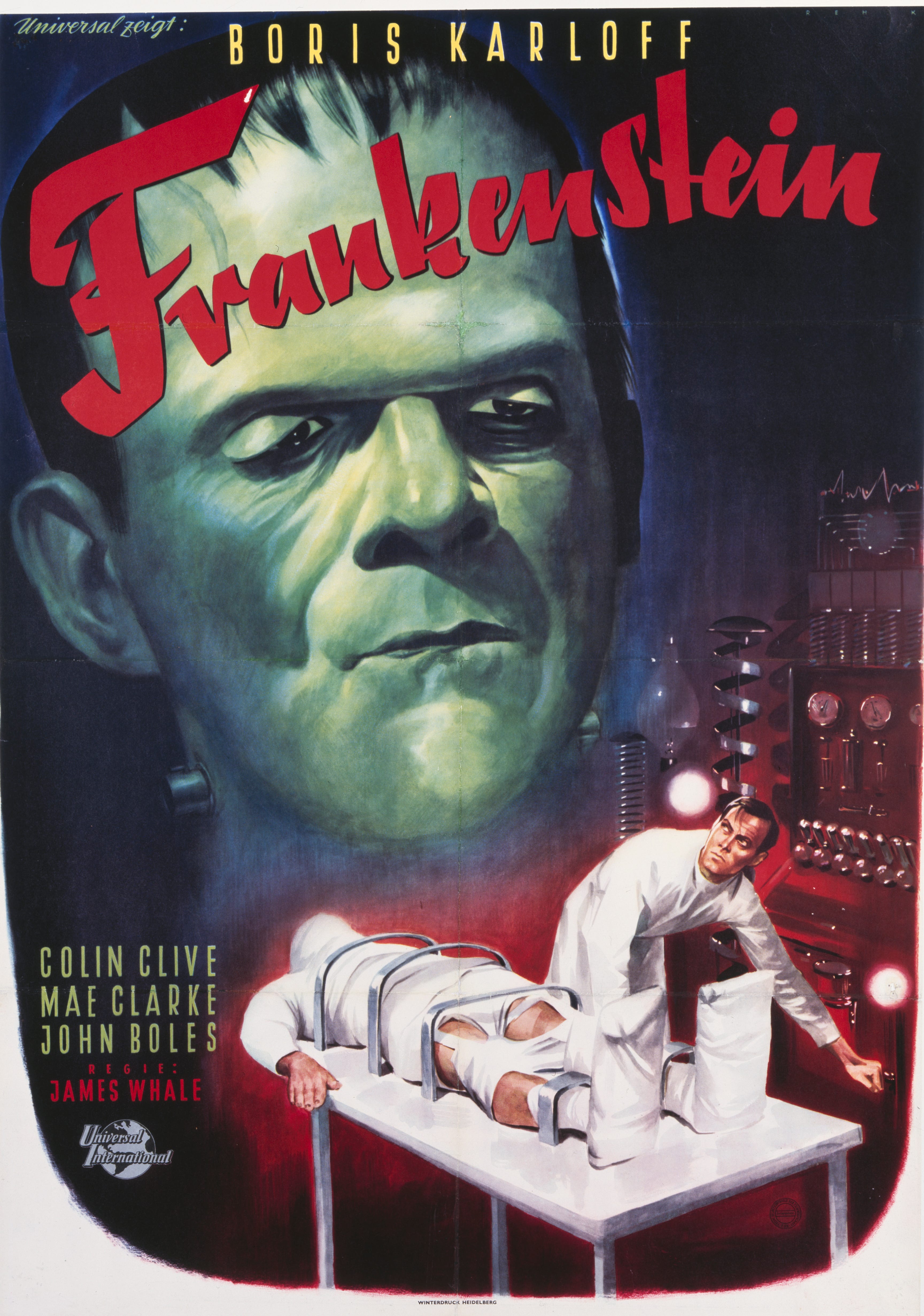
Mary Shelley’s Frankenstein remains salient as a literary masterpiece because of an arresting question: what is monstrosity, and where does it begin and end? Who creates it, and who bears responsibility for it?

In pop culture, we’ve given the name Frankenstein to the creature. In the book, Frankenstein is the creator. Victor Frankenstein is a guy who lost his mother too soon and was consumed with a desire for greatness. He read some books that propelled him to recklessness. He distanced himself from his friends and family in pursuit of creating life from death. It’s easy to imagine him today as someone who radicalized after too many hours on YouTube and became a memelord, crypto bro, or AI CEO.
Once Victor made it, once he animated death with life, he was disgusted by his own creation. It wasn’t what he thought it would be. It didn’t feel the way he thought it would feel. His abandonment fed the creature’s loneliness and strengthened its resolve for vengeance. The creature felt that Victor owed it something. Victor thought the creature was his relentless curse. Frankenstein and the creature ended up in a potent loop of intramural resentment.
…And, baby, that’s politics, too.
Diet Coke
I can count on one hand the things1 I love more than Diet Coke. Give me Diet Coke with soft ice and a lime, and my troubles have melted away. I’m not bragging. I understand that no doctor is recommending caffeine or aspartame as part of a balanced diet. I just enjoy it, and I tell myself that a fridge cig > than a lit cig.
I was not at all surprised that our episode about SNAP and soda2 sparked fierce debate. It highlights a lot of the differences between us and the buttons we press for others. We’re aware that a lot of people think, “Sarah is too much, and Beth is not enough.” We’re aware that a lot of people do a particular math when listening, discounting our perspectives for a variety of reasons, many of which are fair and some of which we’d argue aren’t.
When we recorded this episode, I could feel its heat, but I thought the conversation was interesting. To me, the subject is controversial for the same reasons that it’s worth discussing: it’s concrete; it’s within all of our experiences; it concerns inequality of both wealth and power; it brings up bodies and health and “health” and shame; and it asks not just what our policies are, but what our priorities are. …And, baby, that’s politics.
FFS, Beth, put these pieces together already
Sarah and I can fight on the microphone about SNAP and soda without getting mad at each other. Because our personalities are so different, I expect there to be tension between us at least in style and often in substance. I’m positive that Sarah would make different choices about everything in my life if she Freaky Friday-ed into my shoes: who to be friends with, what to have for dinner, how to parent my daughters, how to decorate my house and pot my plants…all of it. Our mantra is “our differences are a strength,” and we try to live it all the time. We work really hard to eliminate intramural resentment between us.
Intramural resentment has a ton to do with our perspectives and politics, though. A number of you pointed out the relationship between critiques of social safety nets and the perception that these programs are primarily used (and abused) by people of color. Garrett, for example, recommended this “You’re Wrong About” episode in the comments. I take those points and do not disagree. I would just add that in my life experience, the people who have been angriest about SNAP have been white people angry about other white people receiving assistance that they themselves made maybe $500 too much in annual income to receive. Intramural economic resentment exists in some form among people of all colors and creeds across the earth and always has. I think in this conversation (as in many) race is relevant but not dispositive.
Some of you said you heard a disdain for people who rely on SNAP in this episode. I can’t argue anyone out of their perception. I just know, in my heart and brain, that Sarah is not seeking to rob anyone of dignity, and I am not trying to serve anyone up to mega-corporations for exploitation. I also know that we are not free from disdain. I think Sarah fairly feels some disdain for corporations that have placed the pursuit of profit ahead of almost all over motives. I feel some disdain (much of it totally unfair!) toward almost all forms of authority.
So many of you have added to this conversation, and I love your additions. I find your additions valuable. I find many of them persuasive. The conversation after the conversation is the point. I meet and like so many people who listen to our show. It can be tempting to take heat in the comments section personally, to build up a form of intramural resentment here. But the more we do this, the more invigorating I find the heat. I desire to be in kind relationships that have an element of friction because everyone is thinking hard.
Many of you think it was ridiculous to make this episode at all given everything the administration is up to. You have a point. I don’t know exactly how to allocate time between and among state legislatures and the federal government. I don’t know when it helps to model disagreement about something that is lower stakes than blowing up boats in the Caribbean Sea and rounding up citizens and noncitizens in communities using video game tactics. There are so many things that I don’t know.
I most enjoyed talking about the wider implications of “common sense” politics. I think Sarah is right when she says that a significant percentage of Americans are worn out with hearing about how complex everything is, sick of “it depends” as an answer, and fed up with leaders who shrug their shoulders. I think she’s spot on about people wanting clear, direct communication and understandable policy prescriptions that we try right-the-hell now. I think I’m right that the best policy is made when we’re willing to say how complex everything is and explore all of the branches of “it depends” and shrug our shoulders about some problems because policy actually can’t fix everything or most things. That’s a pickle, and in many ways, the pickle, especially for people seeking office in the next few years. I’d like to spend more time here with Sarah and with all of you. Honestly, I thought that’s where a lot of our time would be spent after this episode. But you never know exactly what will happen when you hit publish.
My favorite reading of Frankenstein is to imagine that Mary Shelley put herself in both Victor and his creature, that she sees both creating something and the creation itself as monstrous and real and alive and relatable and worthy of a measure of compassion. When we make something (a monster, a piece of legislation, a podcast episode), we do so in pursuit of both love and ego. After we’ve made it, it looks different than we intended—both to us and even more so to everyone else.
I know that my vision is obscured by resentments. I am as infected by the politics of 2025 as anyone else. Still, I want to be in it with all of you, even with JD Vance. I want to be capable of acknowledging the strengths of his arguments and the weaknesses of my own. I want to know in a really deep way that Sarah isn’t too much, and I am very much enough. I want to read every comment with enthusiastic curiosity and gratitude. We wrestled with an interesting question together this week, all of us, and that feels, to me, like a creature of hope in a monstrous world.
This Week’s Low Stakes Controversy:
Best song about soda (will not be taking votes on this)
Are you a part of the Spice Cabinet?
It’s been a year since we made Substack our home base, and we’d love for you become a subscriber here if you haven’t already. Make sure we’re showing up in your inbox with thoughtful news analysis and a community of 24,000+ people navigating this moment together. If you’re reading this, you’re already here! All you need to do now is confirm you’re actually subscribed so you never miss what we’re sharing:
For those of you already subscribed, we’ve got some fun in store: we just turned on our referral leaderboard. Share Pantsuit Politics with friends over the next month and watch your place on the leaderboard climb. The top 5 referrers by Thanksgiving week get a gift box of treats from our team. Let’s do this together.
Copyright (C) 2024 Pantsuit Politics. All rights reserved.
Not people. Things. If people are included, I need at least two hands. 😉
I’ve worked at adopting “soda” because we make an internationally-distributed podcast. In my heart, it’s always been and always will be “coke.”
I definitely did not take Sarah’s comments in the snap episode as having disdain or judgement for poor people. I relistened to a section of it after reading a lot of the harsher comments, and I think the disconnect was that there were spots in the episode where I clearly understood that she was describing the opinions and thoughts of others without preface, or was playing devils advocate without saying so. I thought her opinion on soda itself was extreme—but she admitted that, just as you, Beth always admit that your criminal justice ideas are extreme. I appreciate that about you both—how much better off would we be if more of our leaders would admit when their ideas are extreme and perhaps not in line with the opinions of the vast majority of Americans? Would we be able to to have better conversations about compromise and middle ground ideas? Is the problem that people won’t admit to their extremism to others or that they cannot themselves SEE that they have extreme ideas because of how strong their feelings are?
It reminds me very much of my (now deceased) MIL, who had very strong feelings about religion and politics that did not align with mine at all, but her feelings were floating balloons, wholly untethered to facts. Yet she would say “I feel this way, and my feelings are strong, if you don’t agree with me, that means you don’t respect me and I am entitled to your respect, so my opinions based solely on my feelings are deserving of deference.” You simply cannot have conversations with or gain ground with someone who can’t acknowledge that there are other points of view.
I’m grateful you two keep showing up. I was irritated by the comment that people say you blow things up and then “apologize” for 5 episodes. When you do apologize for getting tone or facts wrong, I appreciate that; when you take the time to post game and react to our feedback, I appreciate that. Because that is what it looks like to be in relationship. I’m disgusted by relational cancel culture, for lack of a better term—“if you say something I don’t like or disagree with, you’re dead to me.” If that’s the new standard, the very concepts of family and friendship and professionalism are at just as much a risk as democracy itself.
Sometimes your positions challenge me. I bristle, I think, I engage with this community, and I almost always come out on the other side with a clearer idea of my views and values. This is why I show up here and why I will continue to.
On the pickle of "it depends" policy conversations vs "clear, direct, right-the-hell now" policy experiments -- I would love more podcasts picking apart that very challenging dynamic!
One worry that I felt as Sarah was trying to channel her hypothetical middle of the road common sense audience, as that I don't want us to go down the path of a million think pieces about a Trump voter in a rural bar that we had in Trump round 1. I don't want to get stuck in the mire of "real Americans" or "heartland voters" that inevitably describes people living on the coasts as out of touch and fake.
I would challenge us (the audience and the PP team) to consider how we might find ways to be more direct and clear and common sense without embracing the terms of the debate as presented by MAGA and MAHA. How do we pivot from their framing and assert a truer one? How can be weave together values and evidence into a better conversation that steers us toward the agenda we believe government SHOULD be tackling?
I agreed with Beth heartily that getting micromanage-y about what items in grocery stores SNAP benefits can and cannot be used on is a terrible use of government, on many fronts. Budget-wise, nutrition-wise, economy-wise, poverty-wise, just a poor tool for the job.
So if we were advising someone running in those states on what stance to take when asked to comment on the SNAP provisions, what would we say? My first draft thinking, "We have bigger problems in this state than what goes into the shopping cart of someone down on their luck. The amount of money it takes to try to address that is more than the size of the problem itself. Let's work on getting more people better paying jobs instead. Let's work on making healthy food more affordable instead."