


It took listening at 1.5x speed on long road trips, breaking up episodes for lunch time viewing on my iPad, and several long evenings in front of the television but I have finally completed all six episodes (12 hours total!) of Ken Burns’ documentary The American Revolution. Like most Americans, I knew the basics of our founding story—the tea party, the midnight ride, the Declaration. But Burns does what Burns does best: he takes familiar history and makes it feel urgent, intimate, and surprisingly relevant.
Here are five things that stuck with me:
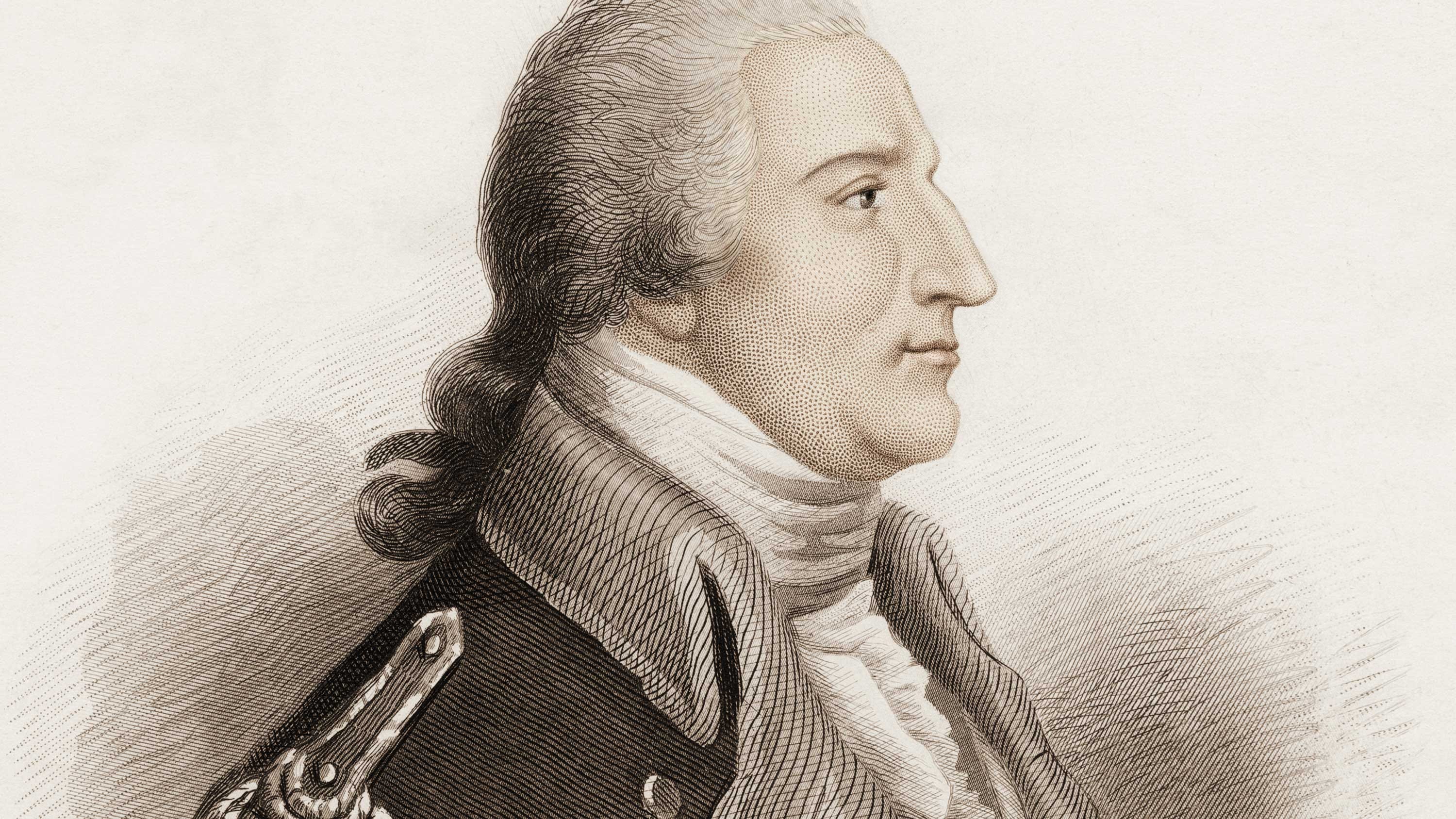
1. Benedict Arnold Was a Badass Before He Was a Traitor
We remember Arnold as the ultimate betrayer, the name synonymous with treason. But before his betrayal, Arnold was arguably the Revolution’s most daring military commander. His leadership during the brutal march to Quebec (also didn’t know we tried to take a huge swath of Canada!), his naval tactics on Lake Champlain, and his heroics at Saratoga were nothing short of extraordinary. The man was fearless, tactical and one of Washington’s most trusted commanders. Which makes his eventual betrayal all the more devastating—and complicated. Burns doesn’t excuse Arnold’s treason, but he does force us to reckon with the fact that this wasn’t a simple villain. He was a hero who felt slighted, passed over, disrespected…and then fell in love with a loyalist. His story is a reminder that history-making betrayals often have a very human origin - the festering wound of resentment.
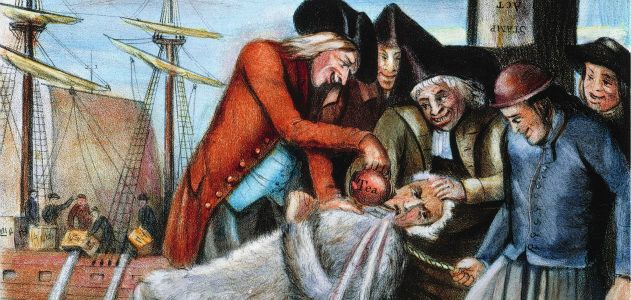
2. This Was a Civil War, and It Was Brutal
We call it the Revolutionary War, but Burns shows us it was really a civil war—neighbor against neighbor, brother against brother, communities torn apart from within. If I was being honest, I thought most all of the colonists were patriots with a few British officers here and there. Not the case. Loyalists weren’t some distant enemy; they were your cousin, your business partner, the family down the road. And Patriots weren’t always noble freedom fighters. They tarred and feathered loyalists, burned their homes, seized their property, drove them into exile. Families fractured permanently over which side to choose. Ben Franklin’s own son remained loyal to the Crown! They never reconciled. The violence wasn’t clean or distant—it was intimate and often cruel. Burns doesn’t romanticize the Patriot cause, and that’s what makes the documentary so powerful. Our founding wasn’t a tidy tale of good versus evil. It was messy, personal, and left deep wounds that didn’t heal with the Treaty of Paris. Our unity has a nation has always been built on the shaky foundation of regional differences, deep personal disagreements, and conflicting values.
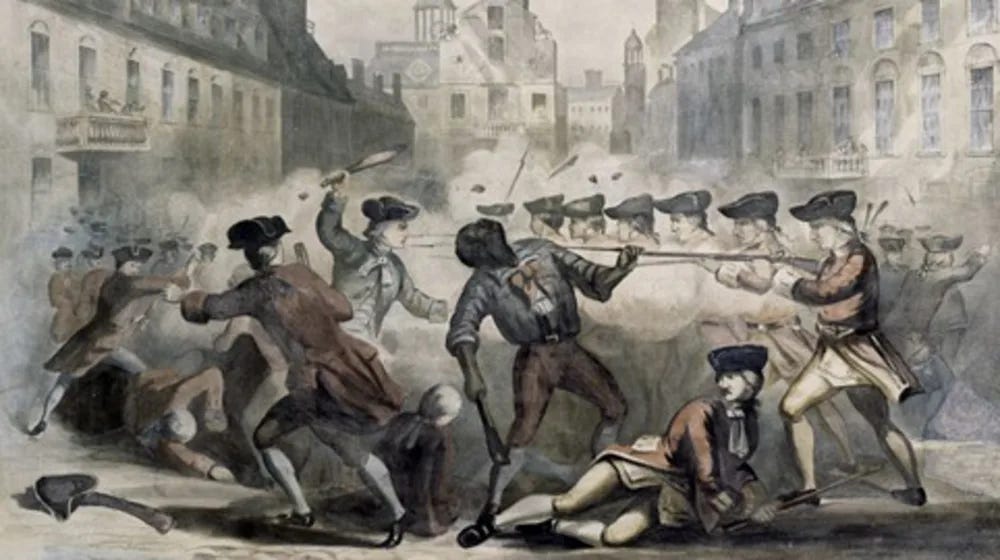
3. Slavery Was Everywhere—And the Revolution’s Relationship to It Was Messier Than We Want to Admit
Burns doesn’t let us look away from slavery’s presence in every corner of Revolutionary America. It was there in the fields, in the founding fathers’ households, in the economy that funded the war. The documentary makes clear that slavery wasn’t some peripheral issue—it shaped the revolution’s reality at every turn. But here’s what Burns also shows: the Revolution wasn’t primarily about slavery in the way some historians have recently argued. The colonists weren’t rebelling to protect the institution from British abolition. Instead, what we get is something more uncomfortable: a revolution genuinely animated by ideas of liberty and self-governance, fought by people who simultaneously enslaved others. The founders weren’t cartoon villains or pure hypocrites—they were people living within a brutal system, some troubled by it, some profiting from it, most doing both. Burns also brings incredible complexity to the experience of black Americans both enslaved and free by showing the ways they made different and deeply personal calculuses. Some in fighting with the British. Some in joining the Revolution. Burns forces us to hold two truths at once: the revolution’s ideals were real and revolutionary, AND those ideals coexisted with grotesque injustice. That tension doesn’t resolve neatly, and maybe it shouldn’t. Similar tensions exist today. There are all manner of injustices that are a part of our lives in 2025 that will perhaps be inconceivable to future generations. Watching the founding generation try and fail around their own was deeply humanizing and humbling.
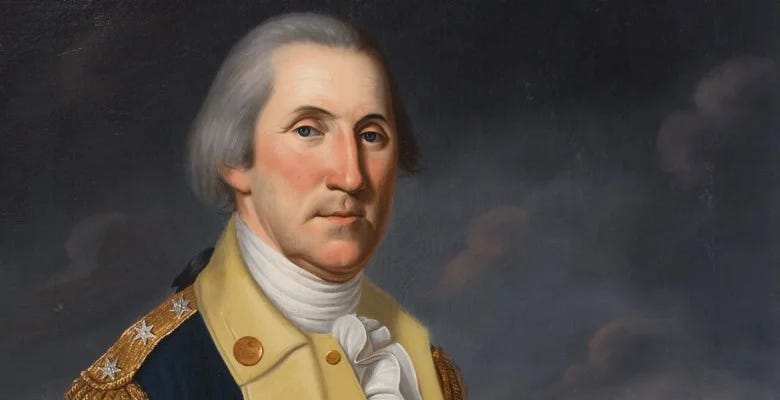
4. There’d Be No America Without George Washington
One moment of the documentary really stood out to me. A historian is arguing against the great man theory of history right before he admits that George Washington is basically the exception. Not because Washington was a military genius (he wasn’t, really), but because of something harder to quantify: his moral authority, his steadfastness, his refusal to grasp for power when he could have. After the war, when his officers were practically begging him to become king, Washington said no. When he could have served as president indefinitely, he stepped down after two terms. The Revolutionary period is full of brilliant minds—Jefferson, Hamilton, Adams, Franklin—but Washington was the indispensable man not because of his intellect, but because of his character. He held the whole fragile experiment - and the Continental Army in particular - together through the sheer force of his personal integrity. There are so many miraculous moments over the course of the war and almost all of them involve George Washington.
5. We Changed the World—And There’s No Way Around It
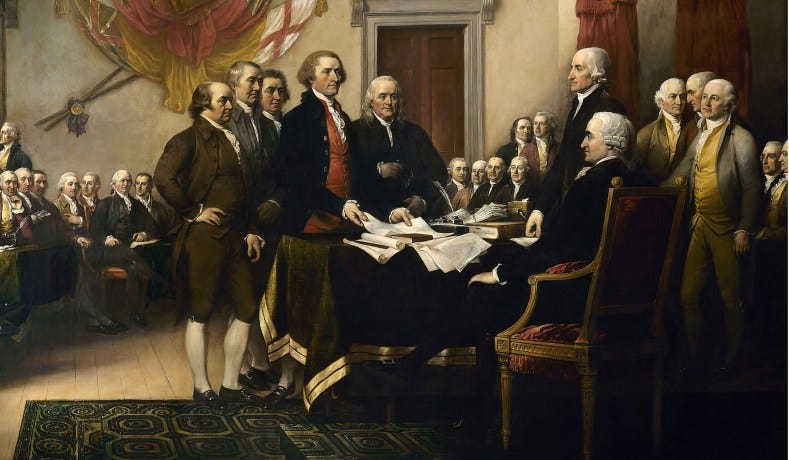
Here’s the thing Burns makes undeniable: for all our failures, all our hypocrisies, all the ways we fell short of our own ideals—we actually did something truly world-changing. We broke the old order wide open. For millennia, human beings organized themselves under kings, emperors, aristocrats, hierarchies of birth and blood. Then a bunch of colonial upstarts said: what if we didn’t? What if we governed ourselves? What if power came from the consent of the governed, not from divine right or inherited title?
The idea was electric. It didn’t stay contained to thirteen colonies on the edge of the Atlantic. Within years, it sparked the French Revolution. It inspired liberation movements across South America. It echoed through Africa and Asia over the next century. The American experiment—flawed, incomplete, hypocritical as it was—fundamentally shifted what human beings believed was possible about how to organize society.
Burns doesn’t ask us to ignore our treatment of enslaved people or Native Americans. The documentary is unflinching about those betrayals. It is also sincerely celebratory when it comes to the ordinary patriots who sacrificed everything - including their own lives - in pursuit of liberty. Burns doesn’t let us downplay what actually happened: a new form of government was born, one that would eventually—painfully, incrementally—expand to include more and more people in its promise of self-governance and human dignity. The revolution’s ideals were bigger than the revolutionaries themselves and they are ideals we still grapple with, that we fail to achieve, that we keep striving for 250 years later.
And I, for one, can’t wait to celebrate the revolution, the nation, and those ideals next year.
This Week’s Low Stakes Controversy
On Tuesday’s episode, Sarah and Beth discussed the box office hits of 2025 and how so many of them are remakes and sequels. From the top1 (and anticipated) franchises of 2025, what is your favorite?
What We’re Reading this Week
Sarah: More Teens Are Taking Antidepressants. It Could Disrupt Their Sex Lives for Years. (The New York Times | Gift Link)
Beth: sorry about your cookies (Hot Dish with Sohla)
Alise: Parable of the Sower by Octavia E. Butler
Maggie: Sarah’s Holiday Favorites (Spotify Playlist)
Copyright (C) 2025 Pantsuit Politics. All rights reserved.
I skipped the horror movies because I think Sarah’s wrong (but I’m listening) about challenging yourself with horror films. -m
I, too, have watched all 12 hours & concur with most of assessments, Sarah, especially that the "Revolution was brutal, hypocritical, & world-changing," sometimes all at once. Yes to that. My only real disagreement is with your final assessment of Washington. I can't say his integrity led him to have a greater impact than other leaders, not after he ordered the slaughter of native Americans & the burning of their fields & villages. Maybe it was his strength of will, the power of his personality, a clarity of vision--there was clearly something. But I can't call it integrity after he issued those orders. Which leads me to the 1 thing I'd add to your assessment. In the same category as the impact of slavery, I'd include the impact of the patriots' treatment of native people & their rights & lands. Such a painful part of the story. And yet, as you said, this brutal, hypocritical effort changed the world for the better. For those of you looking forward to watching, I'll just say you should not expect the documentary to be always enjoyable. For me it was interesting, informative, powerful, & sometimes hard to watch.
Big Revolutionary War fan here! Grew up near Philly, and have read at least 4 biographies of some of the heroes of this period. I hope the upcoming year makes all of us realize how amazing our forefathers' work was, and that we continue to fight to keep their ideals going, and evolving as they have.