

Can you explain why the Epstein Files weren't released before?
New Segment: Dear Pantsuit Politics

Sometimes our community has questions that are timely and important, and we want to address them. We’ll start sending some of them to your inbox in case you have these questions too.
Dear Pantsuit Politics,
Can either of you explain to us bewildered audience members why the Epstein files weren’t released before? Like 10 years ago, was there a legal reason?
- Lacey
As a starting point, this isn’t normal. The government (whether it’s the federal government or state or local authorities) investigates a potential violation of law and then acts (charges a person with a crime, starts a civil lawsuit, etc.) or doesn’t based on its conclusion. It doesn’t announce to the world that it investigated and what it collected in the process. That’s good! We don’t want the government using its enormous powers to collect information and share it with the public outside of official processes managed by a court of law.
We are only talking about releasing the Epstein files because the public at large reasonably believes the government has failed in its responsibilities.
To understand why, here’s a very quick review:
At least as early as 2005, police in Palm Beach, Florida, began investigating Epstein. He was first charged with crimes by a grand jury in July 2006. The police who investigated this case believed the county prosecutor gave Epstein special treatment by charging a lesser offense than they felt they could prove. At this point, the federal government, through the FBI, began investigating Epstein.
Sometime in 2007, Epstein’s lawyers worked with a federal prosecutor, Alex Acosta, on a deal that would allow Epstein to avoid being charged with federal crimes in exchange for pleading guilty to two counts of soliciting prostitution in the state of Florida. Epstein again received unusual treatment in a variety of ways:
He made this secret deal with federal prosecutors, the details of which we still don’t know
He was charged with lesser offenses than the evidence might have warranted
He served most of that sentence out of jail. That sentence ended in July 2009.
Meanwhile, some of Epstein’s victims began to speak out about the extent of his crimes. In November 2018, the Miami Herald published Julie K. Brown’s reporting about how Epstein’s case was handled. Her reporting was especially salient at the time because Alex Acosta was serving in the cabinet as President Trump’s Secretary of Labor. The reporting prompted federal prosecutors in New York to open a new investigation into Epstein.
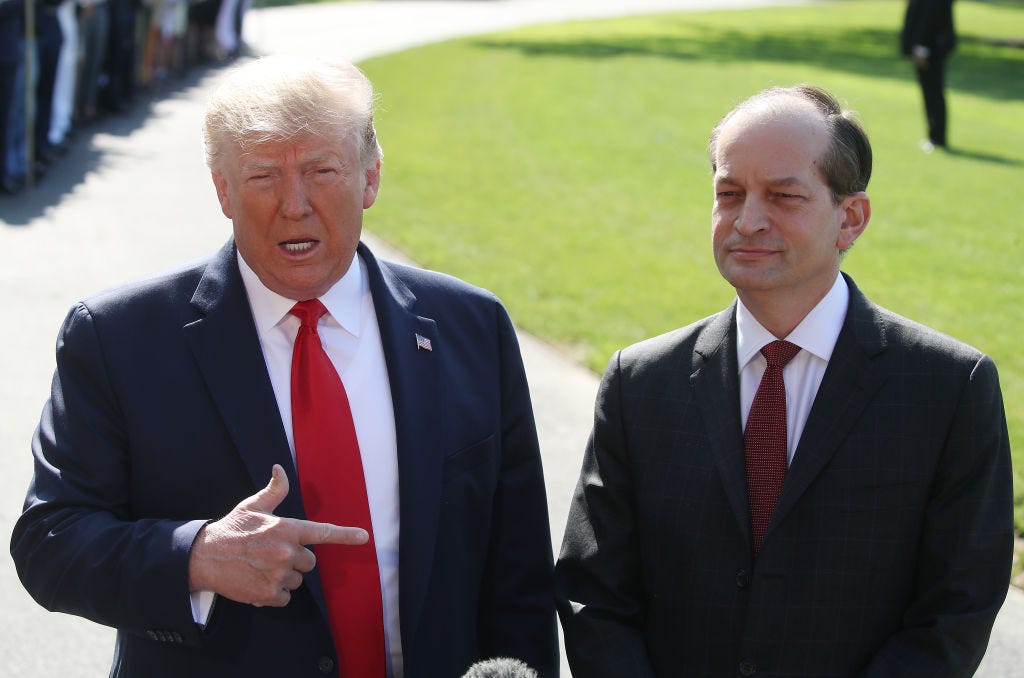
Epstein was arrested on federal sex trafficking charges in July 2019. Alex Acosta resigned. Epstein died in jail in New York in August 2019.
There’s obviously a lot more to this story than those facts. And that’s why “the Epstein files” as a phrase contains so much. There are multiple Epstein stories: each individual victim’s story, the story of Ghislaine Maxwell, the story of wealthy and powerful people in Epstein’s orbit, the story of all of the people who facilitated his crimes, and the story of crimes that he facilitated. In my view, all of those stories are important, but none of them justify the extraordinary step of the government releasing documents it collected in the course of an investigation.
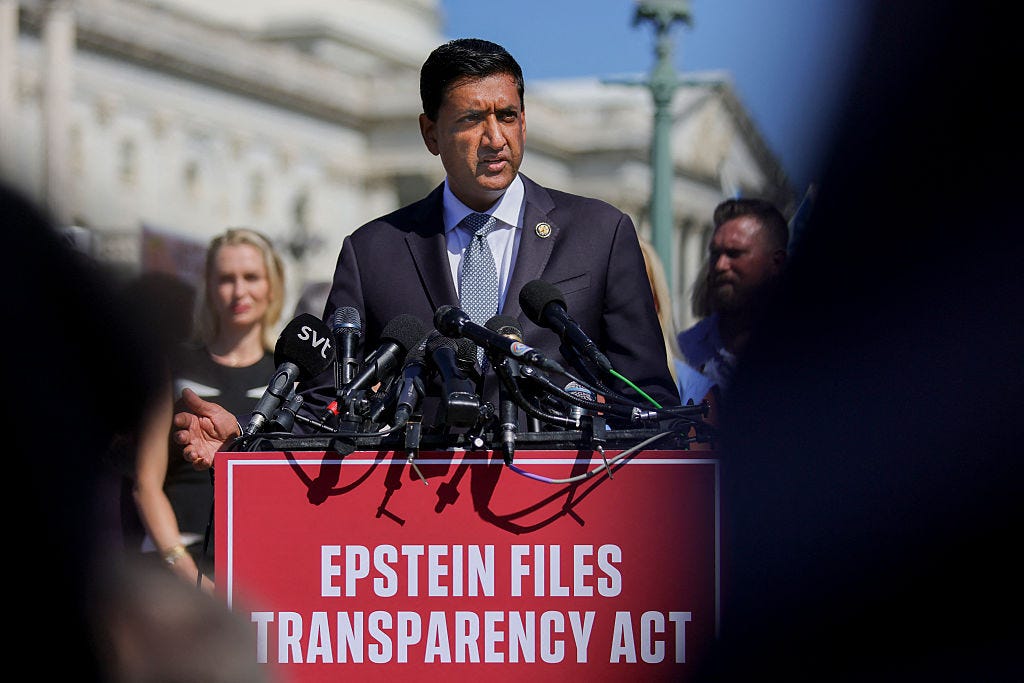
The justification for that extraordinary step is the government’s failures and potential complicity in the Epstein crimes. The government has lost the public’s trust around Jeffrey Epstein, and that means the government needs to act differently in order to make amends and regain its footing as a suitable entity to investigate and prosecute crimes. The government’s power comes from the people, and the people are saying, in a variety of ways, that its handling of this matter has been unacceptable. The most potent way is through Congress’s passage of the Epstein Files Transparency Act championed by Reps. Ro Khanna and Thomas Massie.
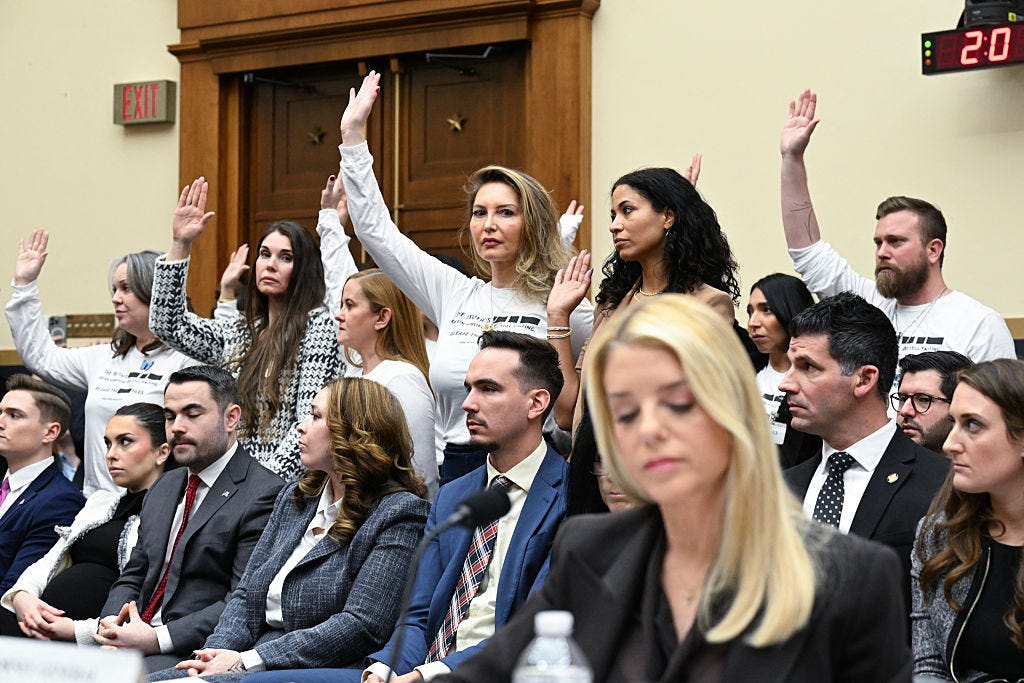
Right now, the government is doing the opposite of making amends and regaining trust. Just this week, Attorney General Pam Bondi refused to candidly answer questions from members of Congress about the Department of Justice’s handling of the Epstein matter (that is the most neutral way I can write that sentence; my opinion is that Bondi’s behavior was disgraceful at best). Just this week, members of Congress gained access to view the Epstein files in their entirety, and those members are raising more questions than answers about the government’s handling of this matter. Some members also report that the Department of Justice is monitoring their document review. They essentially feel tracked and spied on by the Department of Justice as they’re conducting oversight. The latest release of files remains inadequate under the terms of the Epstein Files Transparency Act and violated the law by improperly redacting some information and improperly failing to redact information about Epstein’s victims. It’s one failure after another, and all of these failures add to the public’s reasonable frustration and lack of trust.
I’m trying to write all of this without color or hyperbole. I worry that the depravity of details related to Epstein obscures the main thing: the government has a duty to the public, and it failed in that duty. It failed to prevent a known sexual predator from harming more victims. Its ongoing failures are deepening victims’ pain. It has caused people to fill in gaps with their assumptions and imaginations. These are all wild understatements.
I was late to understanding the enormity of governmental failure in this story, and I am deeply sorry about that. I’m so grateful for Julie K. Brown’s essential journalism, fearlessness, and integrity in upholding the dignity of the very real people who are part of these stories. I can’t recommend her reporting enough, and I watch her posts on X closely to see what she makes of ongoing developments.
Thank you, Lacey, for the question.
We plan to answer more listener questions in posts like this one. Email hello@pantsuitpoliticsshow.com to share a question or prompt.
Further Listening:
More to Say About Jeffrey Epstein (More to Say by Pantsuit Politics)
1,000 Victims and No Accountability: Julie K. Brown on the Epstein Files (Pantsuit Politics)
Rep Ro Khanna joined us to talk about the Epstein Files in this episode
Thanks for all the detail here.
Something that keeps bothering me about this saga, is that I feel like what a not insignificant number of people are looking for in wanting “the truth” from the Epstein files at this point, is just to see a very public, very painful fall-from-grace of wealthy, powerful, connected people, mostly just because they don’t like those people. What they are EXTREMELY and palpably bloodthirsty for, is for those who experience that to also be of the opposite political opinion than them and be guilty of the most heinous things imaginable. Wherever they stand, their mouths are watering to be able to call “the other side” horrific monsters, and it seems they are almost hoping that will happen so they can sink their pitchforks into some flesh. It’s almost like people have this weird hope that people they already don’t like actually have committed sex crimes, and hopefully those crimes were against minors. It’s gross generally, but also because this pursuit seems to largely lack any concern for the actual victims of whatever happened. It’s like many have lost the plot by just hoping for the ultimate schadenfreude.
Thank you for the clear synopsis of this issue. I think it is important to remember that most files from cases are not made public, but we had a presidential candidate that ran on making them public and then hasn't done so.