



Earlier this week, Bill Nye1 went to Washington. He pointed out:
“NASA Science is a bargain. For every dollar spent, at least three come back into the economy.”
Bill Nye
Cell phones. The internet. WD-40. QR codes. All NASA innovations.
We get a lot of benefit on earth from the science we do in space. The trillions of dollars that we spend every year as a nation is hard to fathom, so if we think about the budget of the Government of the United States as $100, we spend about 37 cents a year on NASA2.
While the government is shutdown, we don’t know what Congress will choose to spend on NASA in FY 2025. Current House and Senate budget proposals keep NASA’s funding in place, but the Trump Administration has shown a shocking willingness to ignore congress, and the President’s proposed budget reduces NASA’s budget by 25%, the largest cut since we stopped going to the moon in the 70s.
NASA is very good at what they do. Almost all of the missions on the chopping block have all exceeded their originally planned scope - sometimes by decades - because the equipment still works and is hard to get things into space (much less to Mars, Jupiter, and the Kuiper belt). When planning a mission, scientists don’t know how a craft will hold up in space. Sometimes, you get a probe all the way to the Moon or Mars, and it doesn’t work. NASA is very good at using the things that work for as long as they can.
These projects represent decades of time and research and a $12 billion investment from the American people. Some of them are VERY FAR AWAY from Earth. And continuing to use them costs very little now that the initial research and investment has been made.
Today, I just wanted to tell you a little bit about what NASA has done with your 37 cents:

New Horizons: Canceled
The United States of America has sent a probe to the Kuiper belt. A ring of distant objects orbiting our sun.
The New Horizons spacecraft was launched in 2016. It took 9 years to reach Pluto and sent us back images and information that we couldn’t get any other way. While it completed its original mission, the probe still works and is sending us data from beyond our solar system, looking back and forward beyond anything we’ve ever known before.
Even though the probe still works, the Trump administration wants to cancel the ongoing data collection from this program.
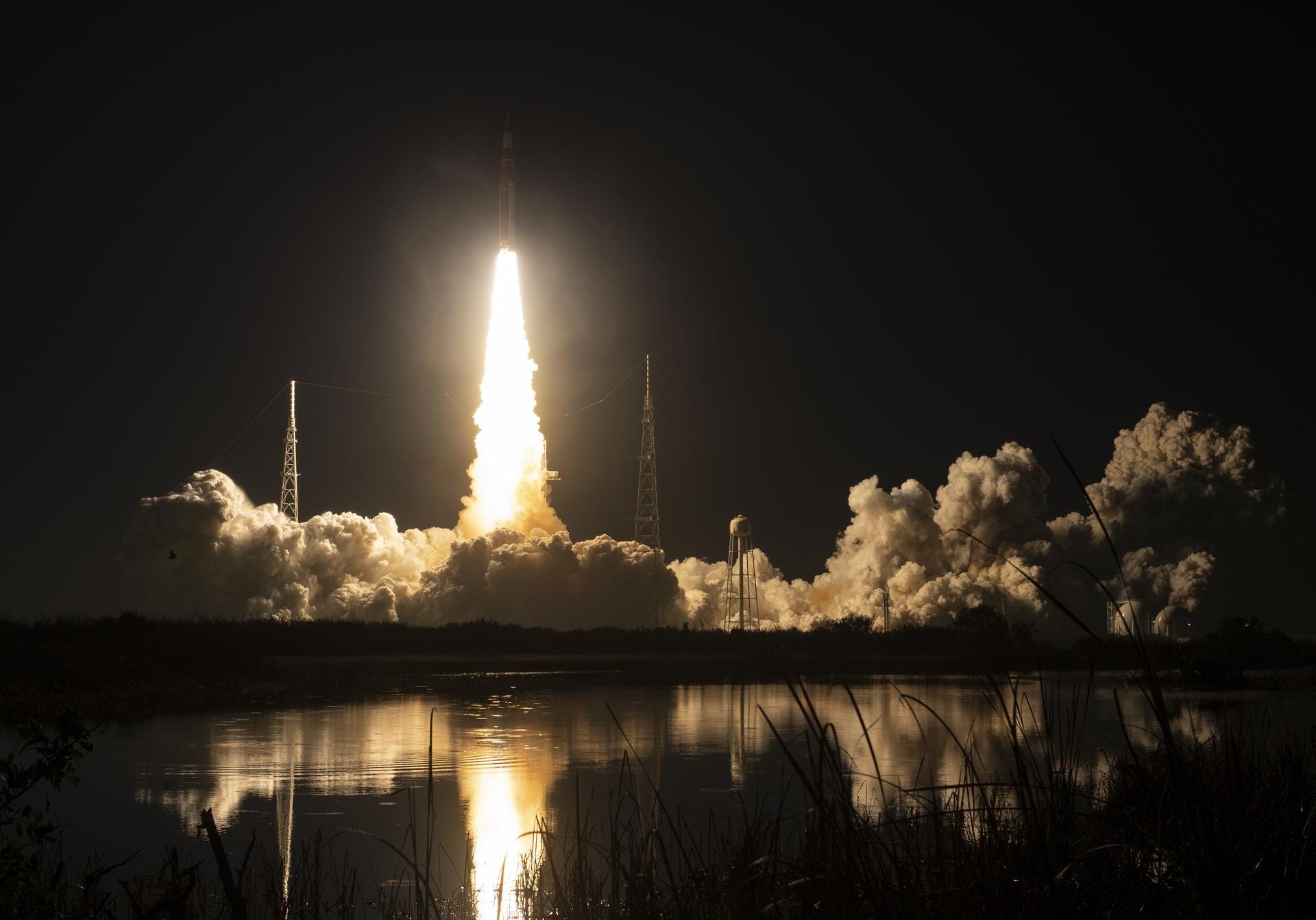
Artemis Program: Canceled
The United States of America has spent the past 18 years slowly (underfundedly) developing a rocket that could take people and cargo to the moon, with the intention of building the first interstellar outpost there.
Artemis I successfully launched in 2022 - this unmanned test flight travelled to and orbited the moon and returned safely. Artemis II will send people on the rocket to do a Lunar flyby. Artemis III and IV are supposed to land humans on the moon—an achievement no public or private entity has done since Apollo 17 in 1972 (FWIW our friends in China, Russia, and India are trying to do the same).
The Trump administration wants to cancel all missions after Artemis IV in favor of a “less expensive” rocket (that does not exist)3.

Juno: Canceled
The Juno probe launched in 2011 and spent 5 years travelling to Jupiter where it has orbited the planted since. The spacecraft has sent us data about the planet, shown us that Jupiter has a ring system, and explored Jupiter’s many moons (some of which could have water, and, possibly, life). If the proposed NASA cuts go through, we will simply turn it off.
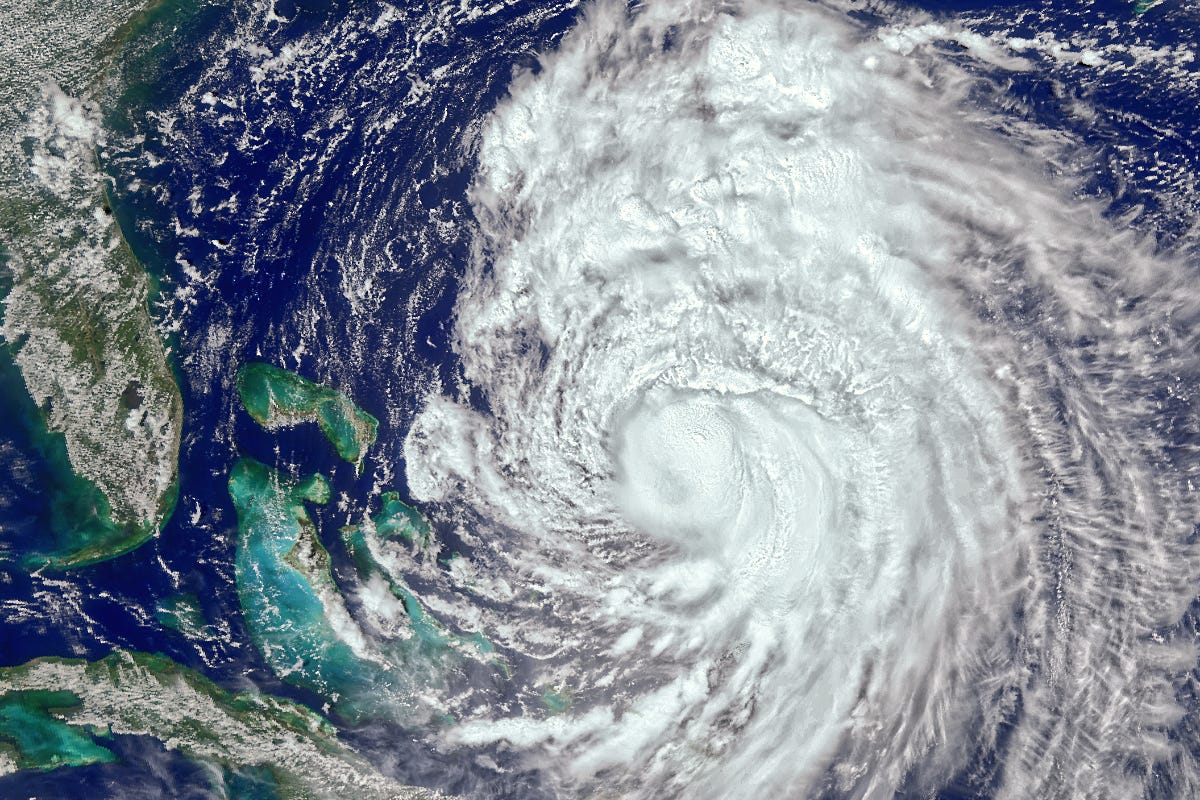
Atmospheric Observatories: Canceled
NASA has a number of observatories in orbit. They monitor carbon dioxide in the atmosphere, global water cycles, how radiation from the sun impacts our atmosphere and life on this planet, aerosols in the atmosphere, temperature and the earth’s magnetic field. This data helps us track climate change4, but also wildfires, hurricanes, and other weather events that impact our life here on the ground. If the Trump administration gets it’s way, we will simply turn them off.

OSIRIS-APEX: Canceled
Last September, for the first time ever, NASA successfully returned a sample from an asteroid for study on Earth. BUT, fun fact, the space craft that landed on the asteroid is still functioning and in space, so they were going to do it again.
This helps us learn about the galaxy and potentially protect ourselves from a species ending event, but you know…why would that matter?5

Mars Atmospheric Study: Canceled
Maven has been orbiting Mars and sending back data about it’s atmosphere since 2014. It has orbited Mars 22,000 times, taken over 10,000 images of the planet, and led to the publishing of over 700 scientific papers. We’ve learned a lot about atmospheric erosion and dust storms on Mars (which might be relevant to future space exploration and also our own planet). But no need to keep learning.

Mars Odyssey: Canceled
The Mars Odyssey spacecraft has been orbiting Mars since 2001. It’s given us information about the chemical composition of Mars and mapped the planets geography. Initially planned to last for 2 years, we’re still collecting data from the spacecraft.

Chandra Space Telescope: Canceled
Before James Webb, we had Chandra. As it turns out we still have Chandra. Chandra is an X-Ray observatory taking pictures of the sky since it’s launch in 1999.

Fermi Gamma-ray Space Telescope: Canceled
Launched in 2008, the satellite telescope Fermi is studying gamma rays and black holes in and beyond our galaxy.
Why Climb the Highest Mountain?
President John F. Kennedy famously said in 1962, “we choose to go to the moon, not because it is easy, but because it is hard.”
The rest of his speech (though less frequently quoted) goes into more detail about the why:6
Those who came before us made certain that this country rode the first waves of the industrial revolutions, the first waves of modern invention, and the first wave of nuclear power, and this generation does not intend to founder in the backwash of the coming age of space. We mean to be a part of it — we mean to lead it. For the eyes of the world now look into space, to the moon and to the planets beyond, and we have vowed that we shall not see it governed by a hostile flag of conquest, but by a banner of freedom and peace. We have vowed that we shall not see space filled with weapons of mass destruction, but with instruments of knowledge and understanding.
At the time, the President was asking the American people to spend 50 cents every week on his vision of going to the moon. This was a big ask, but one that people bought into.7
This is not to say that NASA is a perfect agency that does not need improvement8. Government is clunky. It’s frustrating to people at NASA that it’s taken 18 years to get Artemis off the ground, and even more frustrating that now that it’s finally ready for launch that the President wants to scrap it.
But it is to say, I think the American people get their money’s worth from NASA. And instead of recklessly cutting old projects, I wish we could envision a renovation of our agencies that enables them to compete and thrive in our new century9.
Low Stakes Controversy
In honor of Fall and Spooky Season, the spookiest candy of all: Candy Corn
Limited Time Holiday Shop
Our limited-time holiday merchandise sale is live through October 19 – featuring ornaments, beanies, hoodies, mugs, and more!! This is a limited run with early December delivery, so don’t wait. When it’s gone, it’s gone.

What We’re Reading and Thinking About This Week
Three Generations. Two Dogs. One House. And It All Works. (The New York Times | gift link)
Copyright (C) 2025 Pantsuit Politics. All rights reserved.
Yes, the science guy
Using this math, we spend $22 on social security, $18 on the military and veterans, $14 on Medicare, $14 in interest on the national debt, and $10 on social security disability, unemployment assistance, and other kinds of income security for Americans.
I presume they anticipate using Space X’s Starship, which, on its 10th test flight, did not explode. We could have a long aside about how NASA rockets are more expensive and take longer to build because the people of the United States would not tolerate funding 9 failed test flights.
But, as we all know, climate change is woke
Let’s ask a dinosaur (anyone have a chicken around?)
Emphasis mine
And based on recent Pew Research polls, there is still an overwhelming bipartisan consensus that Americans like NASA.
Alise told me that you probably did not want me to write about needed wastewater improvements at the Kennedy Space Center and the need for flexible funding for the agency to support public-private partnerships. I think she was right, but I’m VERY interested in this.
I could go on and on about the wastewater and electricity issues, y’all.
I guess I could have included a positive call to action. The Planetary Society is really doing the work here to lobby and advocate for NASA in the halls of Congress: https://www.planetary.org/save-nasa-science
As someone who visited Johnson Space Center several times when we lived in Houston and who has a kid who wants to be an aerospace engineer and someday return to NASA, I find this so maddening. And it goes back to Beth's More to Say about waste. SO MUCH WASTE. People are so short-sighted. We need to bring back the critical thinking necessary to see long-term benefits instead of just thinking about the here and now.